12 Crazy Canadian Foods That Will Shock — and Charm — Your Taste Buds
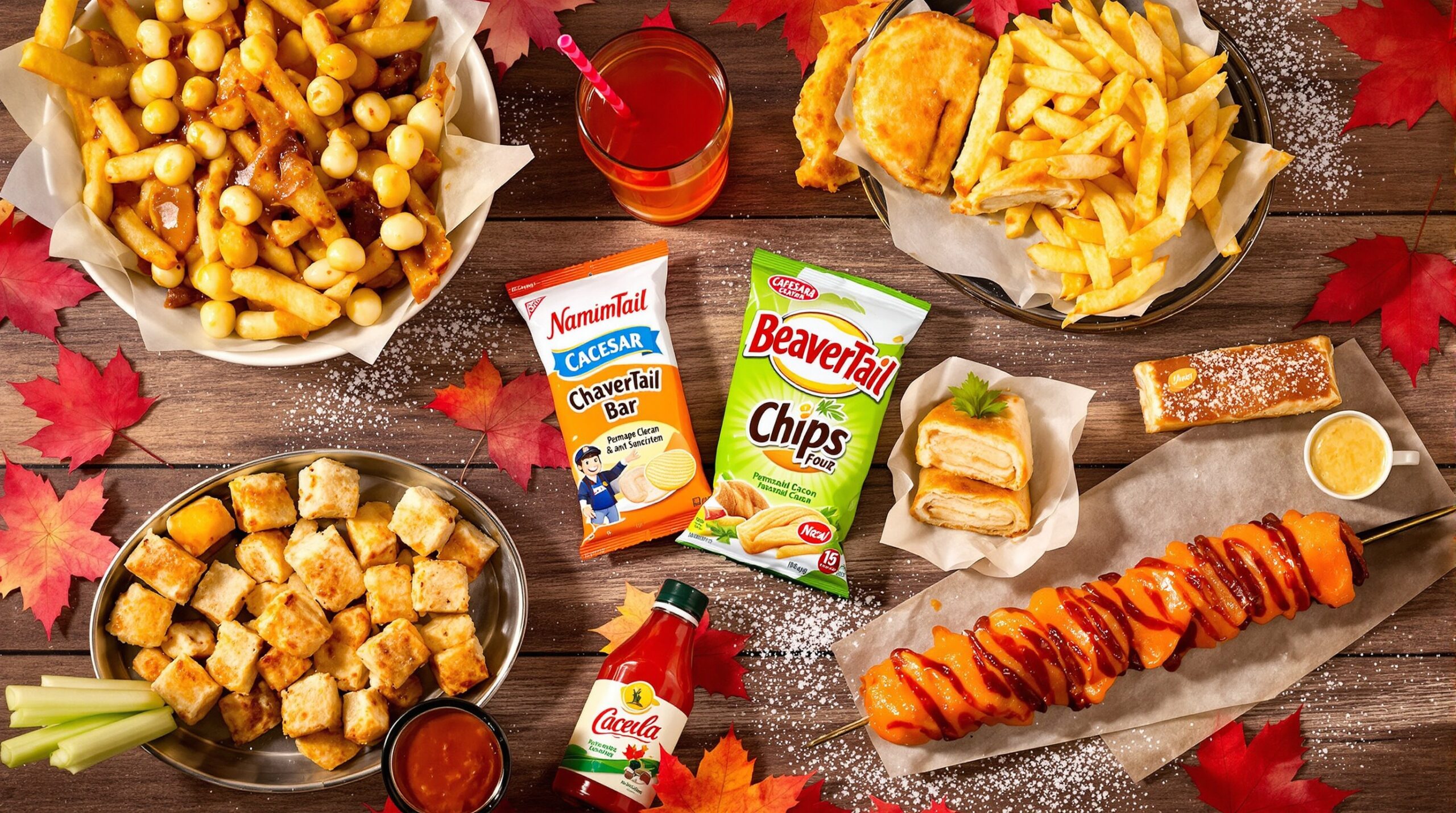
Canada is politely known for maple syrup and polite people — but dig a little deeper and you’ll discover a wild, delicious, and sometimes eyebrow-raising culinary landscape shaped by Indigenous traditions, immigrant communities, and a whole lot of regional personality. Here are 12 of the country’s most surprising dishes and snacks, what they taste like, where they come from, and where to try them.
1. Poutine — Quebec’s glorious mess
- What it is: French fries topped with cheese curds and smothered in brown gravy.
- Why it’s crazy: The squeaky curds and gravy-soaked fries create a texture and flavor combo that makes sense only after you try it.
- Try it in: Montreal or Quebec City; every province has its own twist (pulled pork, foie gras, smoked meat).
2. BeaverTails — pastry meets carnival ingenuity
- What it is: Flattened, fried dough shaped like a beaver’s tail and loaded with toppings (cinnamon sugar, chocolate hazelnut, maple butter).
- Why it’s crazy: It’s basically a carnival funnel cake dressed like a souvenir.
- Try it in: Ottawa or any winter festival — perfect after skating on the Rideau Canal.
3. Nanaimo Bars — no-bake decadence
- What it is: Layered bar with a crumb base, custard-flavored buttercream middle, and a chocolate top.
- Why it’s crazy: Room-temperature ‘cake’ that’s rich, sweet, and utterly addictive — and born on Vancouver Island.
- Try it in: British Columbia bakeries and cafes nationwide.
4. Ketchup Chips & All-Dressed Chips — chip flavors that defy explanation
- What they are: Potato chips with uniquely Canadian flavors — tangy ketchup or a mix of BBQ, salt & vinegar, and sour cream (‘all-dressed’).
- Why they’re crazy: These flavors sound odd until you can’t stop eating the bag.
- Try them in: Any Canadian grocery store.
5. Caesar Cocktail — Canada’s national brunch weapon
- What it is: Vodka mixed with Clamato (tomato + clam juice), hot sauce, Worcestershire, and a celery-salt rim.
- Why it’s crazy: Savory, briny, and almost a meal in a glass — garnished with everything from celery to bacon.
- Try it in: Bars and brunch spots across Canada.
6. Tourtière — Québec’s spiced meat pie
- What it is: Savory pie of minced meat (often pork or a mix) seasoned with warm spices.
- Why it’s crazy: Comforting and fragrant — a holiday staple with roots in French colonial cooking.
- Try it in: Quebec bakeries and at family tables during the holidays.
7. Bannock — Indigenous fried bread with centuries of history
- What it is: Simple dough that’s baked, fried, or cooked over coals; traditionally made by Indigenous peoples across Canada.
- Why it’s crazy: It’s humble, versatile, and central to Indigenous foodways — served sweet or savory.
- Try it in: Indigenous-run cafes or community events; ask about local variations.
8. Prairie (Rocky Mountain) Oysters — not for the faint of heart
- What it is: Deep-fried bull testicles, often breaded and served as an appetizer.
- Why it’s crazy: That name is intentionally misleading — it’s a rite of passage at some prairie fairs.
- Try it in: Rural fairs and novelty restaurants across the Prairies.
9. Smoked Salmon and ‘Salmon Candy’
- What it is: Wild Pacific salmon, smoked and often sweetened or glazed.
- Why it’s crazy: The smoky-sweet iteration—sometimes called “salmon candy”—turns a savory fish into an almost-dessert snack.
- Try it in: British Columbia fishmongers and Indigenous markets.
10. Butter Tarts — debate-worthy pastry
- What it is: Tiny tart shells filled with a runny, sugary filling that may or may not have raisins or nuts.
- Why it’s crazy: Canadians fiercely debate the “raisins or no raisins” question — local loyalties run deep.
- Try it in: Ontario bakeries.
11. Peameal (Back) Bacon Sandwich
- What it is: Lean, flavorful back bacon rolled in cornmeal (peameal) and usually served on a bun.
- Why it’s crazy: It’s not streaky bacon, not ham — it occupies a delicious in-between.
- Try it in: Toronto delis and St. Lawrence Market.
12. Akutaq-ish & Arctic Traditions — flavors shaped by the land
- What it is: Traditional Arctic foods include versions of whipped fat-and-berry mixes (sometimes known historically as akutaq), preserved fish, and game like caribou.
- Why it’s crazy: Ingredients and techniques are adapted to one of the harshest climates on Earth, producing a cuisine unlike anywhere else.
- Try it in: Northern communities and Indigenous cultural events — always approach with respect and an openness to learn.
Quick & Easy: Make Classic Poutine at Home
Ingredients:
– 4 large potatoes, cut into fries
– Vegetable oil (for frying)
– 2 cups cheese curds
– 2 cups beef or chicken gravy (hot)
Method (simplified):
1. Fry or oven-bake the fries until crisp. Drain well.
2. Pile fries onto a plate, scatter cheese curds on top.
3. Pour hot gravy over curds so they soften but stay squeaky.
4. Eat immediately — it’s best warm and messy.
Where to Try These Foods (Quick Picks)
- Montreal: Poutine, smoked meat, bagels
- Vancouver / Vancouver Island: Nanaimo bars, salmon candy
- Ottawa: BeaverTails
- Toronto: Peameal bacon, multicultural twists on classic dishes
- Prairies: Bannock, prairie (Rocky Mountain) oysters at fairs
- Northern communities: Indigenous food traditions — try a cultural center or guided experience
A Few Etiquette & Sustainability Notes
- Indigenous foods are cultural and often tied to ceremony — ask, be respectful, and support Indigenous-run businesses.
- Some game and marine foods (seal, certain fish) have sustainability and ethical considerations — check local advisories.
- If you’re offered a traditional dish, acceptance and curiosity are the best responses.
Canada’s culinary identity is a patchwork: comfort food, Indigenous traditions, immigrant creativity, and regional pride. Some of these dishes are ‘crazy’ because they surprise visitors; others are simply delicious and deeply local. The next time you cross the 49th parallel, let your taste buds go on an adventure — you might be pleasantly shocked.